YCaaS
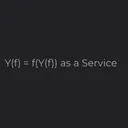
Y(f) = f(Y(f)) as a Service
About
YCaaS — Y(f) = f(Y(f)) is a minimalist yet intellectually engaging platform that introduces a unique perspective on the startup ecosystem through a recursive conceptual lens. Available at ycaas.ai
, the site frames its core idea around a mathematical-style expression, suggesting that systems can evolve by continuously feeding their own outputs back into themselves. This concept is both symbolic and practical, reflecting how modern products, companies, and technologies improve over time through feedback loops, iteration, and compounding value. Rather than presenting dense explanations, the platform uses simplicity and structure to guide users toward a deeper understanding of how innovation works today.
The experience begins with a clear division into three primary categories: Software, Consumer, and Frontier. Each one represents a distinct way of building, scaling, and delivering value in the modern economy. The Software category focuses on B2B SaaS, developer tools, and vertical platforms—products designed to serve other businesses. These solutions are typically built around efficiency, automation, and scalability, often relying on subscription-based models that generate recurring revenue. YCaaS highlights how this category dominates a large portion of startup ecosystems, especially within accelerator programs. The recursive idea becomes evident here: software improves as it is used, collecting data, refining processes, and becoming more valuable over time.
The Consumer category shifts attention toward products built for end users. This includes mobile apps, social platforms, marketplaces, and content-driven ecosystems where engagement is the primary metric of success. Unlike B2B software, consumer products thrive on user experience, emotional connection, and accessibility. YCaaS subtly communicates that growth in this space often comes from network effects and viral loops, where users themselves become part of the product’s expansion. The recursive principle applies strongly—each new user interaction contributes to improving the platform, shaping features, and increasing overall value.
The Frontier category explores the outer edge of innovation, where technology meets the physical world. This includes industries such as hardware, biotechnology, robotics, energy, defense, and AI infrastructure. These startups are fundamentally different from purely digital companies, as they require deep technical expertise, longer development cycles, and significant investment. However, they also hold the potential to generate transformative breakthroughs that can redefine industries or solve global challenges. YCaaS presents this category as ambitious and complex, where progress is not just iterative but often exponential when breakthroughs occur.
What makes YCaaS particularly compelling is its ability to combine abstraction with clarity. The platform does not overwhelm users with excessive information; instead, it provides a clean mental model that encourages reflection. The recursive formula Y(f) = f(Y(f)) becomes a metaphor for continuous improvement, adaptability, and self-reinforcing growth—core principles behind many successful startups. This makes the platform not only informative but also thought-provoking, inviting users to think beyond traditional categories and consider how systems evolve over time.
In essence, YCaaS — Y(f) = f(Y(f)) serves as both a conceptual framework and a practical guide for understanding the startup world. It is especially valuable for founders, developers, investors, and anyone interested in innovation, offering a modern lens through which to view how ideas are built, refined, and scaled. By distilling complex concepts into a simple structure, the platform succeeds in making advanced thinking accessible while still maintaining depth and relevance.

Ready to launch?
Submit your product and get discovered by builders and creators worldwide.
Launch Now
FounderPlaybooks.
What other founders did to grow.
2722 dispatches from hundreds of founders, pulled from the week's best podcasts.
a habit tracker like Sebastian's that we had chatted with a few months ago that ranks well in ASO so iOS uh app store optimization.
Use App Store Optimization as a Sustainable Moat Alongside Paid Channels
After the interview, host Pat Walls frames two winning strategies for crowded app categories: viral social media content (Evan's approach) or strong App Store Optimization. He presents ASO as a distinct, sustainable moat — a different growth vector that compounds organically and works independently of influencer spend.
Go look at the one and two star reviews and see what people are complaining about. See what they dislike about the best players in the market. That's our twist. Our twist is what people dislike about the biggest companies in the space because those are the easiest customers to go after and acquire.
Skip Invention And Differentiate By Mining The One- And Two-Star Reviews Of The Market Leader
Will's framework starts with markets that already have product-market fit, then differentiates by mining one- and two-star reviews of the dominant player. Signaturely beat DocuSign by being 'so easy to use your grandmother could use it,' targeting the exact complaints incumbents ignored. The frustrated reviewers become your easiest customers.
There's a play for whatever you're stuck on.
Read all 2722 playbooks
Comments
0